

Development Trend of Driving Flight Simulators
Apr 13, 2025
The development trend of driving flight simulators is mainly reflected in technological progress, expansion of application scenarios and acceleration of commercialization.
Technological Progress
Flight simulator technology is constantly improving, mainly reflected in the following aspects:
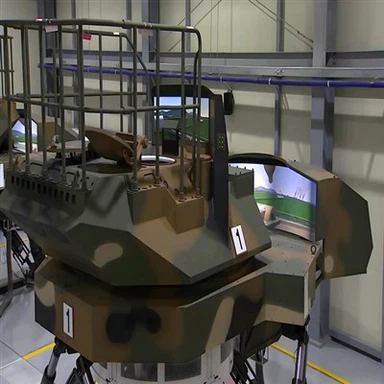
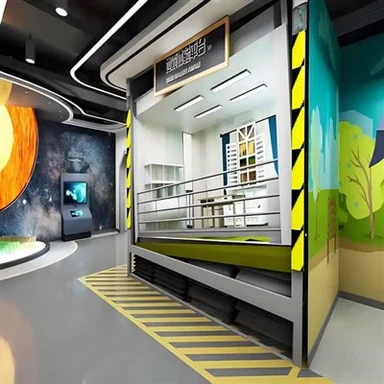
Immersive experience: Through high-definition display technology, realistic sound effects and force feedback devices, simulators can provide a more realistic flight experience. For example, the Low-Altitude Economic Zone demonstrated a simulated experience cabin for eVTOL (electric vertical take-off and landing) aircraft at the Digital China Construction Summit, allowing users to experience the feeling of flying over the city. High-precision simulation: With the improvement of sensor technology and computer processing power, flight simulators can simulate various flight conditions and emergency situations more accurately, improving pilots' ability to respond in real environments. Artificial Intelligence: The application of AI technology enables simulators to provide intelligent feedback and guidance based on pilots' operations, helping pilots master flying skills faster. Expansion of Application Scenarios
The application scenarios of flight simulators are constantly expanding, covering multiple fields: Civil Aviation Training: Simulators are widely used in pilot training to help trainees practice various flight operations and emergency handling in a safe environment. Military training: Simulation training of military aircraft is also an important application field of flight simulators, which can help the military train pilots and ground commanders.
Scientific research and education: Colleges and research institutions use simulators for aerodynamics, navigation and other research, and are also used for teaching and popular science activities.
Commercial application: The commercial application of eVTOL is also advancing, and simulators can help users experience low-altitude sightseeing, urban commuting and other services.
Accelerating commercialization process
The commercialization process of flight simulators is accelerating, which is mainly reflected in the following aspects:
Policy support: The government has increased its support for the low-altitude economy, which has promoted the research and development and application of simulator technology. For example, the "14th Five-Year Plan for General Aviation" clearly defines airspace below 3,000 meters as economic airspace, and the low-altitude economy is listed as a strategic emerging industry.
Increasing market demand: With the rise of the low-altitude economy, the demand for high-quality flight simulators is also increasing. Companies such as Ehang Intelligent and Wofei Changkong are accelerating the commercialization of eVTOL in cultural tourism, commuting and other scenarios.
Technological innovation: The continuous emergence of new technologies and products has driven the rapid development of the simulator market. For example, EHang's EH216-S aircraft has obtained an operational certificate, marking the beginning of the "manned era" of China's low-altitude economy.