

What is the market development and technological trend of dark riding?
Jul 09, 2025
What is the market development and technological trend of dark riding?

1. Market Development Status and Scale
1.1 Driving factors for explosive growth
Consumer upgrade demand: By 2024, the Chinese market size will reach 8 billion yuan, accounting for 5.3% of the amusement equipment market. It is expected to exceed 12 billion yuan by 2025, with a compound annual growth rate of up to 25%. The core driving force comes from the strong demand for immersive experiences among young people and parent-child families.
Expansion of theme parks: The number of theme parks in China is expected to exceed 1500 by 2025, with 60% planning to add dark riding projects as standard equipment for amusement parks.
Technological cost reduction: The decrease in VR device prices and the popularity of 5G networks are driving the large-scale commercialization of real-time rendering and cloud interaction technologies.
1.2 Differentiation of Competitive Landscape
International brands dominate high-end: Disney and Universal Studios occupy more than 50% of high-end market share by virtue of IP advantages, and ETF Ride Systems and Simtec are the representatives of technology output.
The rise of local leaders:
Yaisu Technology: Seize the mid-range market with cost-effective solutions.
2. Core technology evolution direction
2.1 Dynamic Vehicle Revolution
The popularization of trackless AGV technology: using laser SLAM positioning and intelligent central control to achieve multi vehicle collaboration and dynamic path planning (such as the Bailuyuan Film and Television City trackless spacecraft project), breaking through the limitations of traditional orbital space.
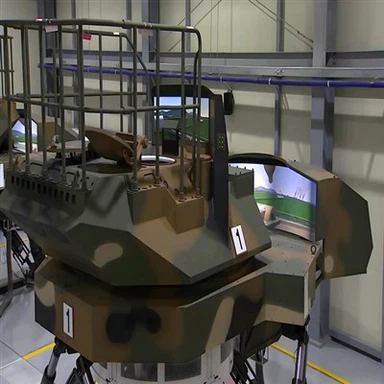
Six degree of freedom platform upgrade: electric drive replaces hydraulic system, response speed is increased by 30%, and accurate simulation of falling, rapid turning and other movements is achieved.
2.2 Immersive Technology Fusion
Multimodal sensory interaction:
Environmental effects: Improved integration of wind, water mist, and odor simulation systems (such as the lava fire effect in Zaohe Longyun City);
Tactile feedback: Molecular level realism technology applied to skiing and collision scenes.
Breakthrough in Projection Technology:
Naked eye 3D ring screen/ball screen has become mainstream, with a resolution of up to 8K (such as the projection scheme of ScienceVision);
AR virtual real fusion: seamless integration of physical scenery and dynamic projection, with error control in milliseconds (Alcorn McBride synchronization system).
Intelligent control and interaction upgrade:
AI Narrative Engine: Generate branching storylines based on tourist behavior data, increasing replay rates by 40% (such as the Qufu Confucian Culture Customization Project);
Metaverse linkage: NFT digital collections are bound to offline experiences, expanding the IP derivative chain (Huaqiang Fantawild's "Boonie Bears" NFT tickets).
3. Future Trends and Challenges
Personalized experience:
Lightweight and environmentally friendly design
Cross border scene penetration
Industry challenges:
Technical integration complexity: The synchronization error of multiple systems needs to be controlled within 0.1 seconds, which requires extremely high requirements for the central control algorithm;
Content iteration cost: The development investment for a single project exceeds 50 million yuan, and IP customization exacerbates financial pressure.
Dark riding devices are transitioning from passive observation to autonomous exploration, and the deep coupling of technological iteration and cultural narrative will continue to reshape the boundaries of immersive entertainment.