

How does a driving flight simulator simulate icing conditions?
Oct 02, 2025
Yo! I'm stoked to be here as a supplier of driving flight simulators, and today, I wanna dig deep into how our simulators can replicate icing conditions. It's a pretty cool and crucial aspect of flight training, so let's get right into it.
First off, why is simulating icing conditions even important? Well, icing can be a real pain in the you - know - what for pilots. When ice builds up on an aircraft's wings, it messes with the airflow. This can reduce lift, increase drag, and even affect the control surfaces. In extreme cases, it can lead to a loss of control. So, being able to train pilots in a safe, simulated environment where they can experience and learn to handle icing is super valuable.
So, how do we pull it off? One of the key things is getting the visual representation right. Our simulators use high - end graphics engines to create a realistic view of ice forming on the aircraft. You can see the ice gradually accumulating on the leading edges of the wings, the tail, and even on the propellers if it's a prop - driven plane. The graphics are so detailed that you can almost reach out and touch the ice. This visual cue is essential for pilots because it gives them an early warning that icing is occurring.
But it's not just about what you see. We also have to simulate how the ice affects the aircraft's performance. That's where the physics engine in our simulators comes in. It takes into account all the aerodynamic changes caused by ice. For example, as ice builds up, the lift coefficient decreases. Our physics engine calculates this change in real - time and adjusts the flight characteristics accordingly. So, when a pilot tries to take off or climb in an icing situation, they'll feel the aircraft respond differently. It might be harder to gain altitude, and the controls might feel a bit sluggish.
We also simulate the impact of ice on the aircraft's systems. Ice can block sensors, which can lead to inaccurate readings. In our simulators, we replicate this by having the sensor data become unreliable when ice starts to form. For instance, the airspeed indicator might give false readings, making it difficult for the pilot to determine the actual speed of the aircraft. This forces the pilot to rely on other cues and their training to fly safely.
Another important aspect is the audio simulation. When ice is forming, there are distinct sounds that you can hear. Our simulators use high - quality sound effects to recreate these sounds. You can hear the ice hitting the aircraft's surface, and as the ice builds up, there might be a change in the sound of the engines. These audio cues add to the realism of the simulation and help the pilot better understand what's going on.

Now, let's talk about the different types of icing conditions we can simulate. There are clear ice, rime ice, and mixed ice. Clear ice is smooth and forms when large supercooled water droplets hit the aircraft. It can be particularly dangerous because it can build up quickly and is hard to detect. Our simulators can accurately recreate the formation and effects of clear ice. Rime ice, on the other hand, is rough and forms when small supercooled water droplets freeze instantly on contact. Mixed ice is a combination of clear and rime ice. Each type of ice has different characteristics and affects the aircraft in different ways, and our simulators can handle them all.
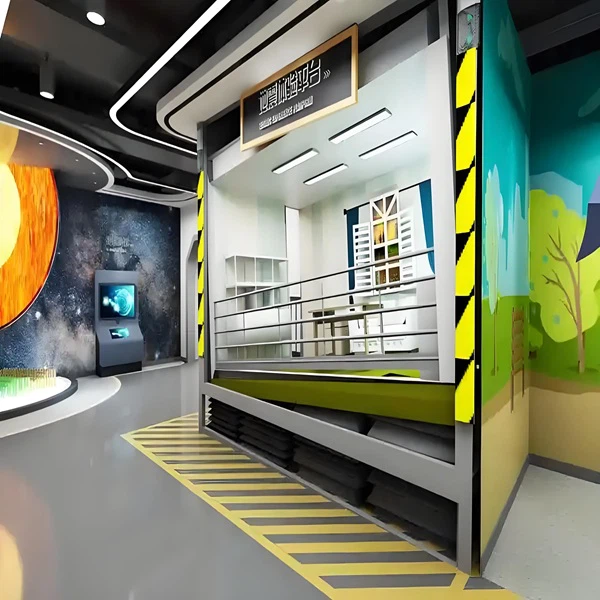
Our driving flight simulators are not just limited to icing conditions. We also offer other great features. For example, we have an Earthquake Simulation Platform that can simulate the impact of earthquakes on ground vehicles and even aircraft on the runway. It's a unique feature that can help train emergency response teams and pilots in dealing with extreme situations.
We also have a Mission Training Platform that allows for realistic mission - based training. Pilots can practice various scenarios, such as search and rescue missions or military operations. This platform is highly customizable, so you can set up different mission parameters and challenges.
And if you're more interested in driving simulations, we have a Driving Simulation Platform. It offers a wide range of driving scenarios, from city driving to off - road adventures. It's great for training professional drivers or just for having some fun.
So, if you're in the market for a high - quality driving flight simulator that can accurately simulate icing conditions and much more, don't hesitate to reach out. We're always happy to have a chat about your training needs and how our simulators can meet them. Whether you're a flight school, a military training facility, or an individual looking to improve your flying skills, we've got the right solution for you.
In conclusion, simulating icing conditions in a driving flight simulator is a complex but achievable task. By combining realistic visuals, accurate physics simulations, system malfunctions, audio cues, and more, we can create a training environment that closely mimics the real - world challenges of flying in icing conditions. And with our additional platforms like the Earthquake Simulation Platform, Mission Training Platform, and Driving Simulation Platform, we offer a comprehensive suite of simulation solutions. So, if you're interested in learning more or making a purchase, just drop us a line, and we'll be more than happy to assist you.
References
- Anderson, J. D. (2001). Fundamentals of Aerodynamics. McGraw - Hill.
- Pallett, H. (2014). Aircraft Icing: Theory, Flight Testing, and Simulation. AIAA.