

What is the size of a typical 6 DOF rotational platform?
Jul 14, 2025
Hey there! I'm a supplier of 6 DOF Rotational Platforms, and today I wanna chat about something that often comes up in our discussions: What is the size of a typical 6 DOF rotational platform?
First off, let's quickly break down what a 6 DOF rotational platform is. "6 DOF" stands for six degrees of freedom. This means the platform can move in six different ways: three translational movements (forward/backward, left/right, up/down) and three rotational movements (pitch, roll, yaw). These platforms are super versatile and are used in a bunch of industries, like aerospace for flight simulators, automotive for testing vehicle components, and even in the entertainment industry for creating immersive experiences.
Now, when it comes to the size of a typical 6 DOF rotational platform, there's no one - size - fits - all answer. It really depends on its intended use.
Size Based on Industry Application
Aerospace and Aviation
In the aerospace industry, these platforms are often used for flight simulators. They need to be large enough to accommodate a full - sized cockpit or at least a significant part of it. A typical flight simulator 6 DOF rotational platform can be quite massive. The base of the platform, where all the actuators and support structures are located, might have a footprint of around 3 to 5 meters in length and width. This gives enough space for the complex mechanical and hydraulic systems that power the movements.
The height of the platform, when fully extended, can reach up to 2 to 3 meters. This height is crucial for simulating the full range of motions that an aircraft experiences during takeoff, flight, and landing. For example, when simulating a steep climb, the platform needs to have enough vertical travel to create a realistic sensation for the pilot - in - training. You can learn more about related motion platforms at 3 DOF Motion Platform.
Automotive Testing
In the automotive industry, 6 DOF rotational platforms are used to test vehicle components under various real - world conditions. The size here is more tailored to the size of the component being tested. For testing small parts like suspension components, the platform might be relatively compact, with a base measuring around 1 to 2 meters in length and width. This smaller size allows for precise control of the movements and reduces the overall cost of the testing setup.
On the other hand, if the platform is used to test an entire vehicle subsystem, like a powertrain, it needs to be larger. A platform for powertrain testing could have a base of 2 to 3 meters in length and width, and a height of around 1.5 to 2 meters. This size is necessary to simulate the vibrations, shocks, and movements that the powertrain would experience during normal driving conditions. You can check out 3 Axis Motion Platform for more info on related testing equipment.
Entertainment
In the entertainment industry, 6 DOF rotational platforms are used to create immersive experiences in theme parks, arcades, and virtual reality setups. The size here is often determined by the number of passengers it needs to accommodate and the available space in the venue. A single - seat platform for a VR experience might be relatively small, with a base of around 1 to 1.5 meters in length and width. This compact size makes it easy to install in small spaces like a VR arcade booth.
For multi - seat platforms used in theme park rides, the size can be much larger. A platform that can accommodate 4 to 6 passengers might have a base of 3 to 4 meters in length and width, and a height of around 1.5 to 2 meters. This larger size is needed to provide a comfortable and immersive experience for the riders, allowing them to feel the full range of motions without feeling cramped. If you're interested in our 6 DOF Rotational Platforms, head over to 6 DOF Rotational Platform.
Factors Affecting the Size
Load Capacity
One of the main factors that affect the size of a 6 DOF rotational platform is its load capacity. If the platform needs to support a heavy load, like a full - sized cockpit or an entire vehicle subsystem, it needs to be larger and more robust. A larger platform can distribute the weight more evenly across its structure, reducing the stress on individual components. This means that the actuators, which are responsible for moving the platform, can operate more efficiently and with less wear and tear.
Range of Motion
The required range of motion also plays a big role in determining the size of the platform. If the application requires a wide range of translational and rotational movements, the platform needs to be large enough to accommodate these motions. For example, a platform used for simulating extreme maneuvers in a flight simulator needs to have a larger travel distance in all six degrees of freedom compared to a platform used for more gentle movements in an entertainment ride.
Actuator Technology
The type of actuators used in the platform can also influence its size. Hydraulic actuators, which are known for their high force and power, often require more space for the hydraulic pumps, hoses, and reservoirs. This can make the platform larger compared to a platform that uses electric actuators. Electric actuators are generally more compact, but they might have limitations in terms of the force they can generate.

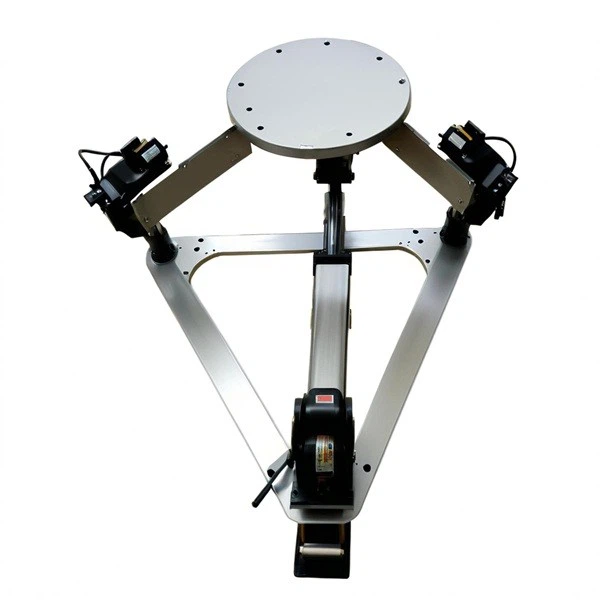
Customization and Size
One of the great things about 6 DOF rotational platforms is that they can be customized to meet specific requirements. If a customer has a unique application with specific size constraints, we can design and build a platform to fit those needs. Whether it's a smaller platform for a research laboratory or a larger one for a major aerospace project, we have the expertise to create a solution that works.
We understand that every customer's needs are different, and that's why we offer a wide range of options for customization. We can adjust the size, load capacity, range of motion, and actuator technology to ensure that the platform meets the exact specifications of the application.
Conclusion
So, as you can see, the size of a typical 6 DOF rotational platform can vary widely depending on its application, load capacity, range of motion, and actuator technology. There's no single "typical" size, but rather a range of sizes that are designed to meet the diverse needs of different industries.
If you're in the market for a 6 DOF rotational platform, or if you have any questions about the size or other specifications, don't hesitate to reach out. We're here to help you find the perfect platform for your needs. Whether you're looking for a platform for aerospace, automotive, entertainment, or any other industry, we can provide you with a high - quality, customized solution.
References
- Smith, J. (2018). "Advanced Motion Platforms for Simulation and Testing". Engineering Journal.
- Johnson, A. (2019). "The Role of 6 DOF Rotational Platforms in the Entertainment Industry". Entertainment Technology Review.
- Brown, C. (2020). "Design Considerations for 6 DOF Rotational Platforms in Automotive Testing". Automotive Engineering Magazine.