

What are the vibration test table's capabilities for simulating different vibration waveforms and directions simultaneously?
Apr 02, 2026
As a supplier of Vibration Test Tables, I get a lot of questions from customers about what these tables can really do. One of the most common queries is about the capabilities of vibration test tables for simulating different vibration waveforms and directions simultaneously. Let's dive into this topic and explore what makes these test tables such a valuable tool in various industries.
Understanding Vibration Test Tables
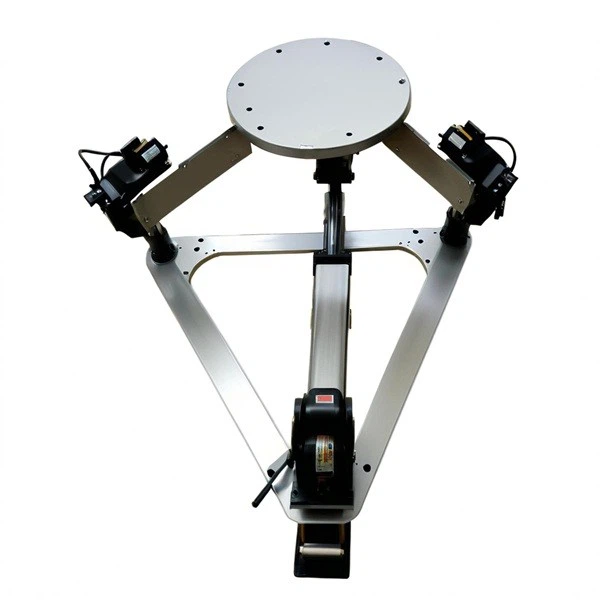
First off, a Vibration Test Table is a piece of equipment designed to subject products to controlled vibrations. These tests are crucial for a wide range of purposes, from ensuring that aerospace components can withstand the rigors of flight to making sure that consumer electronics don't fall apart after a few bumps and jolts.
The basic idea behind a vibration test table is to mimic the real - world vibrations that a product might experience during its lifespan. This could include vibrations from transportation, machinery operation, or even natural phenomena like earthquakes. By simulating these vibrations in a controlled environment, manufacturers can identify potential weaknesses in their products and make improvements before they reach the market.
Simulating Different Vibration Waveforms
One of the key capabilities of a Vibration Test Table is its ability to simulate different vibration waveforms. There are several common types of waveforms used in vibration testing, each with its own characteristics and applications.
Sine Waveform
A sine waveform is one of the simplest and most commonly used waveforms in vibration testing. It represents a single - frequency vibration that oscillates in a smooth, sinusoidal pattern. Sine wave testing is often used to analyze a product's response to a specific frequency or to identify resonant frequencies. Resonance occurs when the frequency of the applied vibration matches the natural frequency of the product, which can cause excessive vibrations and potentially lead to failure.
Random Waveform
Random vibration is more representative of the real - world vibrations that products typically encounter. Unlike a sine wave, which has a single frequency, a random waveform contains a wide range of frequencies all at once. This type of testing is useful for simulating vibrations from sources like road traffic, wind, or machinery with multiple moving parts. Random vibration testing can help identify potential fatigue failures in products over time.
Shock Waveform
Shock testing involves applying a sudden, high - intensity vibration to a product. This simulates events like impacts, drops, or explosions. Shock waveforms are typically short - duration and have a high peak acceleration. Products such as military equipment, automotive components, and electronic devices are often subjected to shock testing to ensure they can withstand sudden impacts without damage.
Our Vibration Test Tables are equipped with advanced control systems that allow us to accurately generate and control these different waveforms. Whether you need a simple sine wave for a basic resonance test or a complex random waveform to simulate real - world conditions, our tables can handle it. You can learn more about our Vibration Test Table on our website.
Simulating Different Vibration Directions
In addition to simulating different waveforms, vibration test tables can also simulate vibrations in different directions. In a three - dimensional space, there are six possible degrees of freedom (DOF) for vibration: three translational (X, Y, and Z axes) and three rotational (pitch, roll, and yaw).
Single - Axis vs. Multi - Axis Testing
Single - axis vibration testing involves applying vibrations in only one direction at a time. This is often the simplest and most cost - effective way to start vibration testing. However, in many real - world scenarios, products are subjected to vibrations in multiple directions simultaneously.
Multi - axis testing, on the other hand, allows us to simulate these more complex real - world conditions. Our 6 DOF Rotational Platform is capable of simulating vibrations in all six degrees of freedom simultaneously. This provides a more accurate representation of the stresses that a product will face in its actual operating environment.
Why Simulate Multiple Directions?
Simulating vibrations in multiple directions is important because it can reveal potential failure modes that might not be detected in single - axis testing. For example, a product might be able to withstand vibrations in the X - direction but could fail when subjected to combined vibrations in the X and Y directions. By testing in multiple directions, we can ensure that products are truly robust and reliable.
Advantages of Simultaneous Simulation
Simulating different vibration waveforms and directions simultaneously offers several advantages. Firstly, it provides a more realistic test environment. In the real world, products are rarely subjected to just one type of vibration in one direction. By replicating these complex conditions in the lab, we can get a better understanding of how a product will perform in the field.
Secondly, simultaneous simulation can save time and money. Instead of conducting multiple single - axis and single - waveform tests, we can perform a comprehensive test in one go. This reduces the overall testing time and the cost associated with testing equipment and labor.
Finally, simultaneous simulation allows for more accurate and reliable test results. It can identify potential problems that might be overlooked in simpler tests, leading to better - designed products and fewer product failures in the market.
Our Product Range
We offer a variety of vibration test solutions to meet different customer needs. In addition to the 6 DOF Rotational Platform and Vibration Test Table, we also have a 3 DOF Motion Platform. The 3 DOF Motion Platform is a great option for customers who need to simulate vibrations in three degrees of freedom and have a more budget - friendly requirement.
Contact Us for Your Vibration Testing Needs
If you're involved in product development and want to ensure the reliability of your products through accurate vibration testing, we'd love to hear from you. Our team of experts is ready to help you choose the right vibration test solution for your specific requirements. Whether you're testing a small electronic device or a large aerospace component, we have the equipment and expertise to meet your needs. Reach out to us and let's start a discussion about how our vibration test tables can benefit your business.

References
- Harris, C. M., & Crede, C. E. (Eds.). (1961). Handbook of vibration and shock control. McGraw - Hill.
- Meirovitch, L. (1986). Elements of vibrations analysis. McGraw - Hill.