

What are the remote - control capabilities of a Ship Hull Cleaning Robot?
Sep 04, 2025
In the maritime industry, the maintenance of ship hulls is of utmost importance. A clean hull not only enhances the ship's fuel efficiency but also extends its service life. Ship Hull Cleaning Robots have emerged as a revolutionary solution for this task, offering a range of remote - control capabilities that make the hull cleaning process more efficient, safe, and precise. As a Ship Hull Cleaning Robot supplier, I am excited to delve into the various remote - control features of these remarkable machines.
1. Remote Navigation and Movement
One of the primary remote - control capabilities of a Ship Hull Cleaning Robot is the ability to navigate and move across the ship's hull. Through a sophisticated remote - control system, operators can direct the robot to specific areas of the hull that require cleaning. This navigation can be achieved in multiple ways.
The robot can be programmed to follow pre - defined paths. For example, an operator can map out a grid pattern on the hull using the remote - control software. The robot will then systematically move along these paths, ensuring comprehensive coverage of the hull surface. This is particularly useful for large - scale cleaning operations where manual control might be time - consuming and less accurate.
In addition to pre - programmed paths, real - time manual control is also available. The operator can use a joystick or other input devices on the remote - control unit to move the robot forward, backward, left, or right. This is essential when dealing with irregularities on the hull, such as protrusions or areas with heavy fouling that require more attention. The real - time control allows the operator to adjust the robot's position and movement speed according to the actual cleaning situation.
The remote - control system also enables the robot to change its orientation. It can rotate in place, which is useful for accessing hard - to - reach areas or for adjusting the cleaning tool's angle. This flexibility in movement ensures that the robot can clean every part of the ship's hull effectively.
2. Cleaning Parameter Adjustment
Another crucial remote - control capability is the adjustment of cleaning parameters. Different parts of the ship's hull may have different levels of fouling, and the cleaning requirements can vary accordingly.
The operator can remotely control the pressure of the cleaning tools. For light fouling, a lower pressure can be used to conserve energy and prevent damage to the hull coating. On the other hand, for heavy fouling, a higher pressure can be applied to remove the stubborn deposits. The pressure adjustment can be made in real - time, allowing the operator to respond quickly to changes in the fouling conditions.
The speed of the cleaning tools can also be adjusted remotely. A faster cleaning speed may be suitable for large areas with relatively light fouling, while a slower speed is better for areas that need more thorough cleaning. This speed control ensures that the cleaning process is both efficient and effective.
In addition to pressure and speed, the type of cleaning tool can also be selected remotely. Some Ship Hull Cleaning Robots are equipped with multiple cleaning tools, such as brushes, high - pressure water jets, or scrapers. The operator can switch between these tools depending on the type of fouling and the hull material. For example, a brush may be used for soft fouling on a painted hull, while a high - pressure water jet may be more appropriate for removing hard - scale deposits on a metal hull.
3. Monitoring and Feedback
Remote - control systems for Ship Hull Cleaning Robots also provide comprehensive monitoring and feedback capabilities. This allows the operator to keep track of the robot's status and the cleaning progress.
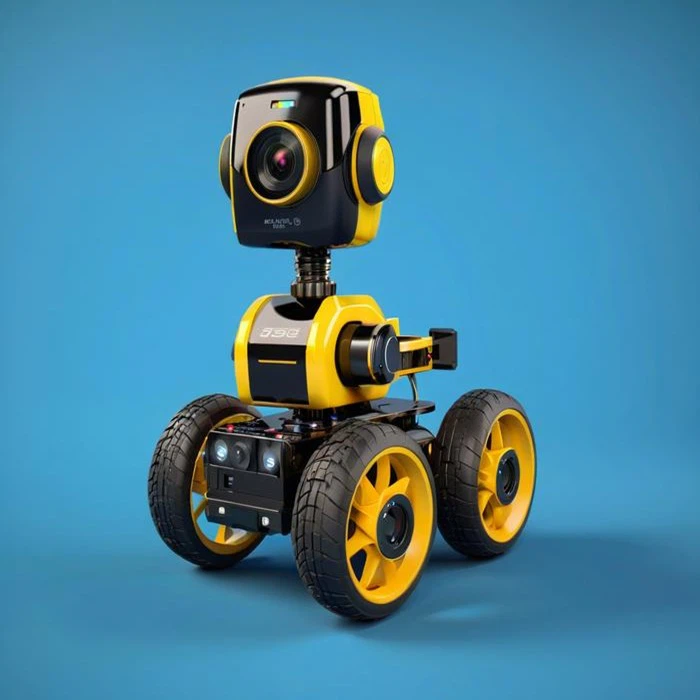

The robot is equipped with various sensors, such as cameras, ultrasonic sensors, and pressure sensors. The cameras provide real - time visual feedback to the operator. The operator can view the cleaning area on a monitor connected to the remote - control unit, enabling them to assess the cleaning quality and identify any potential issues. For example, if there are still some fouling spots left after cleaning, the operator can direct the robot to return to those areas for further cleaning.
Ultrasonic sensors can be used to measure the thickness of the fouling layer and the distance between the robot and the hull surface. This information is transmitted to the remote - control unit, allowing the operator to adjust the cleaning parameters accordingly. Pressure sensors provide data on the pressure applied by the cleaning tools, ensuring that it remains within the safe and effective range.
The remote - control system also provides information on the robot's battery level, temperature, and other operating parameters. This helps the operator to plan the cleaning operation effectively and avoid any unexpected breakdowns. If the battery level is low, the operator can direct the robot to return to the charging station in a timely manner.
4. Communication and Connectivity
Ship Hull Cleaning Robots need to communicate effectively with the remote - control unit. Most modern robots use wireless communication technologies, such as Wi - Fi or Bluetooth, to establish a connection.
Wi - Fi offers a high - speed and stable connection, which is suitable for transmitting large amounts of data, such as video and sensor readings. This allows for real - time monitoring and control over a relatively long distance. However, the range of Wi - Fi may be limited, especially in some maritime environments.
Bluetooth is another option, which is more suitable for short - range communication. It consumes less power than Wi - Fi and can be used for basic control functions. Some robots may also support multiple communication protocols to ensure reliable connectivity in different situations.
In addition to the communication between the robot and the remote - control unit, the robot can also be integrated with other systems on the ship or in the cleaning facility. For example, it can be connected to a central management system that can store and analyze the cleaning data. This integration enables better management of the cleaning operations and provides valuable insights for future maintenance.
5. Safety and Emergency Control
Safety is a top priority when using Ship Hull Cleaning Robots. The remote - control system includes several safety features to protect the robot, the hull, and the operators.
An emergency stop button is provided on the remote - control unit. In case of any unexpected situation, such as a malfunction of the robot or a potential collision with the hull, the operator can immediately press the emergency stop button to halt the robot's operation.
The remote - control system also has a safety lock function. This prevents unauthorized access and ensures that only trained operators can control the robot. The operator needs to enter a password or use a biometric authentication method, such as fingerprint recognition, to unlock the system.
In addition, the robot is equipped with sensors to detect obstacles. If an obstacle is detected, the robot will automatically stop moving and send an alert to the remote - control unit. The operator can then decide how to proceed, such as changing the robot's path or removing the obstacle.
Applications and Advantages
The remote - control capabilities of Ship Hull Cleaning Robots have numerous applications and advantages in the maritime industry.
These robots can be used for both commercial and military ships. For commercial ships, regular hull cleaning can significantly reduce fuel consumption, which translates into cost savings for the shipping companies. In addition, a clean hull can improve the ship's speed and maneuverability, enhancing its overall performance.
In the military sector, Ship Hull Cleaning Robots can be used to maintain the stealth capabilities of naval vessels. By removing fouling, the radar cross - section of the ship can be reduced, making it less detectable by enemy radar systems.
The use of remote - controlled robots also improves safety. Cleaning the ship's hull manually is a dangerous task, as workers are exposed to harsh marine environments, including strong currents, high waves, and toxic fouling substances. With remote - controlled robots, operators can control the cleaning process from a safe location, eliminating the risk of accidents and injuries.
Conclusion
In conclusion, the remote - control capabilities of Ship Hull Cleaning Robots offer a wide range of benefits for the maritime industry. From remote navigation and movement to cleaning parameter adjustment, monitoring and feedback, communication, and safety control, these capabilities make the hull cleaning process more efficient, precise, and safe.
As a Ship Hull Cleaning Robot supplier, we are committed to continuously improving the remote - control technology of our products. We believe that with the development of new technologies, such as artificial intelligence and machine learning, the remote - control capabilities of Ship Hull Cleaning Robots will become even more advanced in the future.
If you are interested in our Ship Hull Cleaning Robot or have any questions about its remote - control capabilities, please feel free to contact us for further discussion and procurement negotiation. We also offer other related products, such as High - Altitude Operation Robot and Industrial Wall - Climbing Robot, which may also meet your specific needs.
References
- "Advances in Marine Robotics for Hull Cleaning", Journal of Maritime Technology, Vol. XX, Issue XX, Year XX
- "Remote - Control Systems for Industrial Robots", Robotics Research, Vol. XX, Issue XX, Year XX
- "The Impact of Hull Cleaning on Ship Performance", Maritime Engineering Review, Vol. XX, Issue XX, Year XX