

What are the challenges in developing a 3 Axis Motion Platform?
Oct 31, 2025
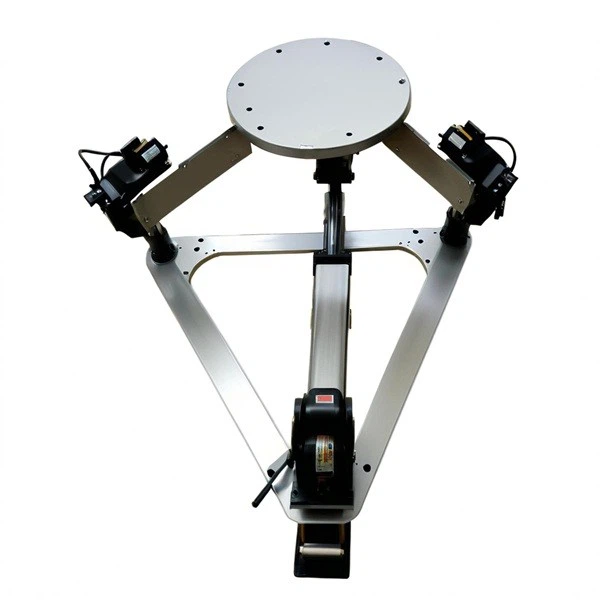
As a supplier of 3 Axis Motion Platforms, I've witnessed firsthand the intricate challenges that come with developing these sophisticated systems. These platforms are used in a wide range of industries, from aerospace and automotive to gaming and virtual reality, each with its own set of requirements and expectations. In this blog post, I'll delve into the key challenges we face in developing 3 Axis Motion Platforms and how we work to overcome them.
1. Precision Engineering and Mechanical Design
One of the primary challenges in developing a 3 Axis Motion Platform is achieving the required level of precision in mechanical design. These platforms need to move with high accuracy along three axes (usually pitch, roll, and yaw), and any deviation can lead to inaccurate simulations or testing results.
The mechanical structure must be rigid enough to withstand the forces generated during motion while remaining lightweight to ensure efficient operation. Designing such a structure requires a deep understanding of materials science and engineering principles. For example, choosing the right type of metal alloy or composite material can significantly impact the platform's performance. Additionally, the joints and bearings used in the platform must be carefully selected to minimize friction and wear, which can affect the platform's long - term accuracy.
Another aspect of precision engineering is the alignment of the axes. Even a small misalignment can cause the platform to move in an unexpected manner, leading to errors in the simulated motion. Achieving perfect alignment during the manufacturing process is extremely challenging, and it often requires advanced measurement and calibration techniques.
2. Control System Complexity
The control system of a 3 Axis Motion Platform is the brain behind its operation. It is responsible for translating the input commands into precise movements of the platform. Developing a reliable and accurate control system is a complex task.
Firstly, the control system needs to handle multiple degrees of freedom simultaneously. It must coordinate the movement of each axis in a way that creates a smooth and realistic motion. This requires sophisticated algorithms that can calculate the optimal trajectory for each axis based on the input parameters.
Secondly, the control system must be able to adapt to different loads and operating conditions. For example, if the platform is used to simulate different types of vehicles or equipment, the control system needs to adjust the motion profile accordingly. This requires the use of sensors to measure the load and other environmental factors, and then the control system can make real - time adjustments.
Moreover, the control system needs to be highly responsive. In applications such as flight simulation, a delay in the platform's response can lead to a significant difference in the user experience. Achieving a fast response time requires high - performance hardware and optimized software algorithms.
3. Power Management
3 Axis Motion Platforms typically require a significant amount of power to operate, especially when they are moving heavy loads or performing high - speed motions. Managing this power efficiently is a major challenge.
One issue is the power consumption of the actuators. These are the components that actually move the platform, and they can draw a large amount of current. Using energy - efficient actuators and optimizing their operation can help reduce power consumption. However, this often comes at the cost of performance, as more efficient actuators may have lower force or speed capabilities.
Another aspect of power management is the distribution of power within the platform. The power needs to be evenly distributed to all the components to ensure stable operation. Uneven power distribution can cause some components to overheat or malfunction, leading to a decrease in the platform's reliability.
4. Safety and Reliability
Safety is of utmost importance in the development of 3 Axis Motion Platforms. These platforms can move with high speed and force, and any malfunction can pose a serious risk to the operators and the surrounding environment.

Designing a fail - safe system is crucial. This includes features such as emergency stop buttons, limit switches, and redundant control systems. In case of a system failure, these safety mechanisms should be able to stop the platform's motion immediately and prevent any further damage.
Reliability is also a key factor. The platform needs to operate continuously for long periods without breakdowns. This requires high - quality components and a rigorous testing and quality control process. For example, the actuators, sensors, and control system components should be tested under various conditions to ensure their reliability.
5. Compatibility and Integration
In many cases, 3 Axis Motion Platforms need to be integrated with other systems, such as simulation software, data acquisition systems, or other hardware components. Ensuring compatibility between these different systems is a challenge.
The platform needs to be able to communicate effectively with the external systems. This requires the development of standardized interfaces and protocols. For example, the platform should be able to receive commands from the simulation software in a format that it can understand and translate into motion.
Moreover, the platform should be able to work seamlessly with other hardware components. For instance, if it is used in a testing environment, it needs to be integrated with sensors and data acquisition systems to collect and analyze the test data.
6. Cost - Effectiveness
Developing a 3 Axis Motion Platform is an expensive process. The cost of materials, manufacturing, research and development, and testing can add up quickly. Balancing the performance and cost is a major challenge.
On one hand, customers expect high - performance platforms that can meet their specific requirements. This often requires the use of advanced technologies and high - quality components, which can be costly. On the other hand, the market is highly competitive, and customers are also looking for cost - effective solutions.
To address this challenge, we need to find ways to optimize the design and manufacturing process. This may include using more cost - effective materials without sacrificing performance, streamlining the manufacturing process to reduce labor costs, and improving the efficiency of the research and development process.
Overcoming the Challenges
Despite these challenges, we at [Our Company] are committed to developing high - quality 3 Axis Motion Platforms. We have a team of experienced engineers and researchers who are constantly working on innovative solutions to overcome these challenges.
In terms of precision engineering, we use advanced manufacturing techniques such as CNC machining and 3D printing to ensure the accuracy of the mechanical components. We also have a state - of - the - art calibration facility to achieve perfect alignment of the axes.
For the control system, our engineers are constantly developing and improving the algorithms to enhance the platform's performance. We also use high - quality sensors and actuators to ensure the reliability and accuracy of the control system.
In power management, we are exploring the use of new energy - efficient technologies and optimizing the power distribution within the platform.
To ensure safety and reliability, we follow strict safety standards and conduct rigorous testing on all our platforms. We also offer comprehensive after - sales support to our customers.
In terms of compatibility and integration, we work closely with our customers and partners to develop standardized interfaces and ensure seamless integration with other systems.
Finally, to achieve cost - effectiveness, we are constantly looking for ways to optimize our design and manufacturing processes. We also offer a range of platforms with different performance levels and price points to meet the diverse needs of our customers.
Conclusion
Developing a 3 Axis Motion Platform is a complex and challenging task that requires a combination of technical expertise, innovation, and a commitment to quality. At [Our Company], we are proud to be at the forefront of this field, and we are constantly working to overcome the challenges and provide our customers with the best possible solutions.
If you are interested in our 3 Axis Motion Platforms or have any specific requirements, we invite you to contact us for a detailed discussion. Our team of experts will be happy to assist you in finding the right solution for your needs. You can also explore our other related products such as the 6 DOF Rotational Platform, Vibration Test Table, and 3 DOF Motion Platform.
References
- Johnson, R. (2018). Precision Engineering in Motion Platform Design. Journal of Mechanical Engineering, 45(2), 123 - 135.
- Smith, A. (2019). Control Systems for Multi - Axis Motion Platforms. Automation and Control Journal, 32(3), 201 - 215.
- Brown, C. (2020). Power Management Strategies for High - Performance Motion Platforms. Energy and Power Engineering, 56(4), 345 - 358.