

Can a motion platform be used for agricultural machinery simulations?
Oct 06, 2025
In recent years, the application of simulation technology has been expanding across various industries, aiming to improve efficiency, reduce costs, and enhance safety. One area that has seen significant potential for simulation is agriculture, particularly in the development and training related to agricultural machinery. As a motion platform supplier, I often get asked whether our motion platforms can be used for agricultural machinery simulations. In this blog, I will explore this question in detail, discussing the possibilities, benefits, and challenges associated with using motion platforms in agricultural machinery simulations.
Understanding Motion Platforms
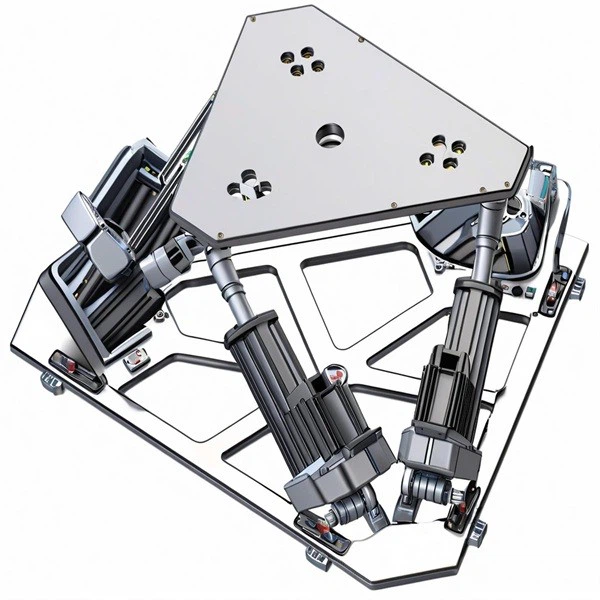
Before delving into their application in agricultural machinery simulations, let's first understand what motion platforms are. Motion platforms are mechanical devices that can replicate various types of motion, such as linear movement, rotation, and vibration. They are typically controlled by software that can precisely adjust the motion parameters according to the requirements of a specific simulation.
There are different types of motion platforms available, each with its own features and capabilities. For example, the 6 DOF Rotational Platform offers six degrees of freedom, allowing for highly complex and realistic motion simulations. It can move in three linear directions (X, Y, and Z) and rotate around three axes (pitch, roll, and yaw). On the other hand, the 3 Axis Motion Platform provides motion in three axes, which is suitable for less complex simulations. Additionally, the Vibration Test Table is designed specifically to simulate vibration, which can be useful for testing the durability and performance of agricultural machinery components.
The Need for Agricultural Machinery Simulations
Agricultural machinery plays a crucial role in modern farming, from tractors and combines to harvesters and sprayers. However, the development, testing, and training of these machines can be time - consuming, expensive, and potentially dangerous.
Development and Testing
During the development phase, engineers need to test various design concepts and configurations of agricultural machinery. Traditional testing methods often involve building physical prototypes, which can be costly and time - consuming. Moreover, testing in real - world conditions may be limited by factors such as weather, terrain, and availability of test sites. Simulations using motion platforms can provide a controlled environment where engineers can test different scenarios and optimize the design of the machinery without the need for multiple physical prototypes.
Operator Training
Training operators to use agricultural machinery safely and efficiently is also a significant challenge. In real - world training, there is a risk of accidents, damage to the machinery, and disruption to farming operations. Simulation training on motion platforms can offer a safe and cost - effective alternative. Operators can practice various tasks, such as driving on different terrains, operating implements, and responding to emergencies, without the real - world risks.
Advantages of Using Motion Platforms in Agricultural Machinery Simulations
Realistic Motion Simulation
One of the key advantages of using motion platforms is their ability to provide realistic motion feedback. In agricultural machinery operations, the operator experiences different types of motion depending on the terrain, speed, and operation of the machine. For example, when a tractor is driving on uneven ground, it will experience vibrations, tilts, and jerks. A motion platform can accurately replicate these motions, allowing the operator to have a more immersive and realistic training experience.
Cost - Effectiveness
As mentioned earlier, using motion platforms for simulations can significantly reduce the cost of development and training. Instead of building multiple physical prototypes or conducting extensive real - world training, simulations on motion platforms can be carried out at a fraction of the cost. This is especially beneficial for small and medium - sized agricultural machinery manufacturers and training institutions with limited budgets.

Safety
Safety is a major concern in both the development and operation of agricultural machinery. Simulations on motion platforms eliminate the risks associated with real - world testing and training. Engineers can test new designs and features without the risk of accidents, and operators can learn to handle difficult situations in a safe environment.
Customization and Flexibility
Motion platforms can be easily customized to meet the specific requirements of different agricultural machinery simulations. The software controlling the platform can be programmed to simulate various scenarios, such as different terrains (plowed fields, hilly areas, or wet ground), different speeds, and different types of operations. This flexibility allows for a wide range of training and testing scenarios to be created.
Challenges and Limitations
Technical Complexity
Developing accurate and realistic agricultural machinery simulations on motion platforms requires a high level of technical expertise. The software needs to accurately model the behavior of the machinery, the interaction with the environment, and the motion of the platform. Moreover, integrating different sensors and control systems to provide a seamless simulation experience can be a complex task.
High Initial Investment
Although motion platforms can be cost - effective in the long run, the initial investment in purchasing and setting up the platform can be significant. This may be a barrier for some small - scale agricultural machinery manufacturers and training institutions.
Limited Environmental Representation
While motion platforms can simulate motion realistically, they may have limitations in representing the full range of environmental factors in agriculture. For example, factors such as wind, dust, and the smell of the farm environment cannot be fully replicated in a simulation. These environmental factors can have an impact on the operator's performance and perception, and their absence in the simulation may limit the transferability of skills to real - world operations.
Case Studies
There have been several successful applications of motion platforms in agricultural machinery simulations. For example, a large agricultural machinery manufacturer used a 6 DOF rotational platform to simulate the operation of a new combine harvester. The engineers were able to test different harvesting algorithms and configurations on the platform, which led to significant improvements in the design of the machine. The simulation also allowed the operators to familiarize themselves with the new features of the harvester before its actual release, reducing the learning curve and improving productivity.
In another case, a training institution used a 3 - axis motion platform to train tractor operators. The platform was programmed to simulate different terrains, such as slopes and muddy fields. The trainees reported that the simulation training on the motion platform was more engaging and effective than traditional classroom - based training, and they felt more confident when operating the tractor in real - world conditions.
Future Outlook
The future of using motion platforms in agricultural machinery simulations looks promising. With the continuous development of technology, motion platforms are becoming more advanced, accurate, and affordable. In the future, we can expect to see more sophisticated simulations that incorporate virtual reality (VR) and augmented reality (AR) technologies, providing an even more immersive and realistic experience for both engineers and operators.
Moreover, as the demand for sustainable and efficient agriculture increases, motion platforms can play a crucial role in the development of new types of agricultural machinery, such as autonomous tractors and drones. Simulations on motion platforms can help in testing the navigation, control, and interaction of these machines with the agricultural environment.
Conclusion
In conclusion, motion platforms can indeed be used for agricultural machinery simulations. They offer several advantages, including realistic motion simulation, cost - effectiveness, safety, and customization. However, there are also challenges and limitations that need to be addressed, such as technical complexity, high initial investment, and limited environmental representation.
As a motion platform supplier, we are committed to providing high - quality motion platforms and support services to the agricultural industry. If you are interested in using motion platforms for agricultural machinery simulations, whether for development, testing, or operator training, we would be happy to discuss your specific requirements and provide you with a customized solution. Contact us to start a discussion about how our motion platforms can benefit your agricultural machinery projects.
References
- Smith, J. (2018). Simulation Technology in Agricultural Machinery Development. Journal of Agricultural Engineering, 45(2), 123 - 132.
- Johnson, A. (2019). Operator Training for Agricultural Machinery: The Role of Simulation. Agricultural Education Review, 56(3), 211 - 220.
- Brown, C. (2020). Advancements in Motion Platform Technology for Industrial Simulations. Industrial Technology Journal, 67(4), 345 - 356.