

What is the working principle of a magnetic climbing robot?
Oct 16, 2025
Magnetic climbing robots have emerged as revolutionary tools in various industries, offering unique solutions to complex challenges. As a leading supplier of magnetic climbing robots, I am excited to delve into the working principle of these remarkable machines and explore their diverse applications.
The Basics of Magnetic Climbing Robots
Magnetic climbing robots are designed to navigate vertical or inverted surfaces with the help of magnetic forces. These robots are equipped with specialized magnetic systems that allow them to adhere to ferromagnetic surfaces, such as steel walls, ship hulls, and industrial tanks. The ability to climb and operate on these surfaces opens up a wide range of possibilities for inspection, maintenance, and cleaning tasks in hard-to-reach areas.
Magnetic Adhesion Systems
The core of a magnetic climbing robot's functionality lies in its magnetic adhesion system. There are several types of magnetic adhesion mechanisms used in these robots, each with its own advantages and limitations.
Permanent Magnets
Permanent magnets are the simplest and most commonly used magnetic adhesion method. These magnets generate a constant magnetic field that provides a strong holding force between the robot and the ferromagnetic surface. Permanent magnets are reliable, require no external power source, and can maintain adhesion even in the event of a power failure. However, they have limited adjustability, and the magnetic force cannot be easily controlled.
Electromagnets
Electromagnets offer greater flexibility compared to permanent magnets. By passing an electric current through a coil of wire, an electromagnet can generate a magnetic field. The strength of the magnetic field can be adjusted by varying the current, allowing the robot to control its adhesion force. This feature is particularly useful for tasks that require precise control over the robot's movement, such as climbing on uneven surfaces or performing delicate operations. However, electromagnets require a continuous power supply, and their performance may be affected by electrical failures.
Hybrid Magnetic Systems
Some magnetic climbing robots use a combination of permanent magnets and electromagnets to achieve the best of both worlds. Hybrid magnetic systems can provide a strong initial adhesion force using permanent magnets and then use electromagnets to fine-tune the adhesion as needed. This approach allows for greater control and energy efficiency while maintaining a reliable hold on the surface.
Locomotion Mechanisms
In addition to the magnetic adhesion system, a magnetic climbing robot needs a locomotion mechanism to move along the surface. There are several types of locomotion mechanisms used in these robots, including:
Wheeled Locomotion
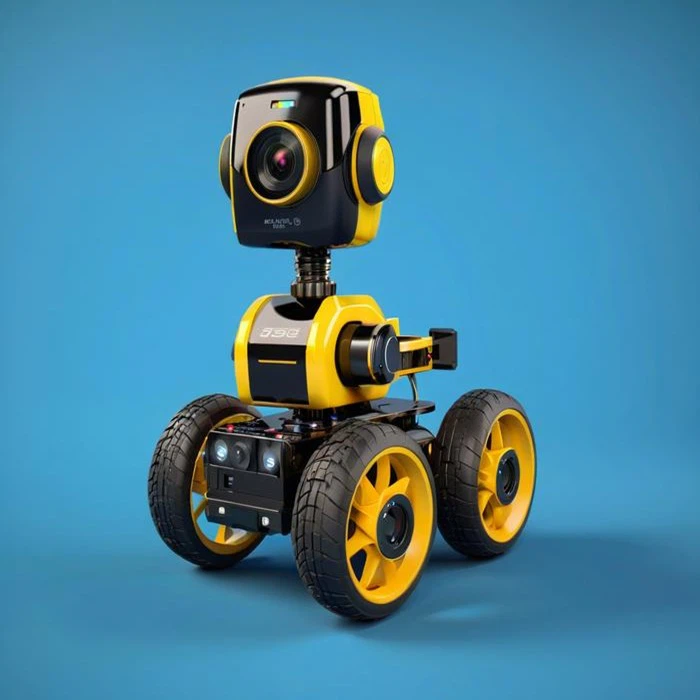
Wheeled magnetic climbing robots are the most common type. They use wheels or tracks to move along the surface, similar to a conventional vehicle. Wheeled locomotion provides high speed and efficiency, making it suitable for large-scale inspection and cleaning tasks. However, these robots may have difficulty navigating over obstacles or uneven surfaces.
Legged Locomotion
Legged magnetic climbing robots are more versatile than wheeled robots. They use multiple legs to move along the surface, allowing them to adapt to different terrain and obstacles. Legged locomotion provides better stability and maneuverability, making it suitable for tasks that require precise positioning or climbing on complex surfaces. However, legged robots are generally slower and more complex than wheeled robots.
Crawling Locomotion
Crawling magnetic climbing robots use a crawling motion similar to that of a snake or a caterpillar. They move by flexing their body segments, which allows them to navigate through narrow spaces and around obstacles. Crawling locomotion provides excellent flexibility and adaptability, making it suitable for tasks that require access to confined areas. However, these robots are typically slower and less efficient than wheeled or legged robots.
Control Systems
A magnetic climbing robot's control system is responsible for coordinating the movement of the robot and ensuring its stability and safety. The control system typically consists of a microcontroller, sensors, and actuators.
Microcontroller
The microcontroller is the brain of the robot. It receives input from the sensors and uses this information to make decisions about the robot's movement. The microcontroller also sends commands to the actuators to control the magnetic adhesion system and the locomotion mechanism.
Sensors
Sensors play a crucial role in the operation of a magnetic climbing robot. They provide information about the robot's position, orientation, and the condition of the surface. Common sensors used in magnetic climbing robots include accelerometers, gyroscopes, magnetometers, and proximity sensors. These sensors allow the robot to detect obstacles, adjust its adhesion force, and maintain its balance.
Actuators
Actuators are responsible for converting the electrical signals from the microcontroller into mechanical motion. In a magnetic climbing robot, the actuators control the magnetic adhesion system and the locomotion mechanism. For example, the actuators may be used to adjust the current flowing through the electromagnets or to drive the wheels or legs of the robot.
Applications of Magnetic Climbing Robots
Magnetic climbing robots have a wide range of applications in various industries, including:
High-Altitude Operation
High-Altitude Operation Robot are used for inspection and maintenance of tall structures, such as bridges, towers, and skyscrapers. These robots can access hard-to-reach areas and perform tasks such as visual inspection, ultrasonic testing, and painting. By using magnetic climbing robots, companies can reduce the risk of human injury and improve the efficiency of high-altitude operations.
Ship Hull Cleaning
Ship Hull Cleaning Robot are used to remove marine growth and rust from the hulls of ships. These robots can operate underwater and on the surface of the hull, providing a more efficient and environmentally friendly alternative to traditional cleaning methods. By using magnetic climbing robots, ship owners can reduce fuel consumption, extend the lifespan of the hull, and comply with environmental regulations.
Anti-Corrosion Coating
Anti-Corrosion Coating Robot are used to apply anti-corrosion coatings to the surfaces of steel structures, such as tanks, pipelines, and bridges. These robots can ensure a uniform and high-quality coating, reducing the risk of corrosion and extending the lifespan of the structure. By using magnetic climbing robots, companies can improve the efficiency and quality of anti-corrosion coating operations.

Conclusion
Magnetic climbing robots are a powerful tool that offers unique solutions to complex challenges in various industries. By understanding the working principle of these robots, we can appreciate their capabilities and potential applications. As a supplier of magnetic climbing robots, I am committed to providing high-quality products and services to our customers. If you are interested in learning more about our magnetic climbing robots or have a specific application in mind, please contact us to discuss your requirements and explore how our robots can help you achieve your goals.
References
- "Magnetic Climbing Robots: A Review," by X. Chen, et al., in Journal of Field Robotics, 2018.
- "Design and Development of a Magnetic Climbing Robot for Ship Hull Inspection," by S. K. Saha, et al., in International Journal of Advanced Robotic Systems, 2017.
- "A Survey of Magnetic Adhesion Technologies for Climbing Robots," by Y. H. Kim, et al., in Robotics and Autonomous Systems, 2016.