

What is the vibration level of a motion platform during operation?
Jan 14, 2026
Hey there! As a motion platform supplier, I often get asked about the vibration level of a motion platform during operation. It's a crucial aspect that can significantly impact the performance and user experience of these platforms, so let's dive right in and explore this topic.
Understanding Vibration in Motion Platforms
First off, what exactly do we mean by the vibration level of a motion platform? Well, vibration is essentially the rapid back - and - forth movement of a mechanical system. In the context of motion platforms, it can come from various sources.
One major source is the motors used to drive the platform. Motors, especially high - torque ones, can generate vibrations as they convert electrical energy into mechanical motion. For example, electric servo motors may have some inherent vibration due to the way the magnetic fields interact and the mechanical rotation of the motor shaft.
Another source is the load on the platform. If the load is unevenly distributed or if it has a high center of gravity, it can cause the platform to vibrate more. When a heavy object is placed off - center on a motion platform, it can create an imbalance that forces the platform to work harder and potentially vibrate more during operation.
The mechanical structure of the platform itself also plays a role. Loose joints, misaligned components, or low - quality materials can all contribute to increased vibration levels. For instance, if the bolts holding the platform together are not tightened properly, the platform may rattle and vibrate as it moves.
Measuring Vibration Levels
To figure out the vibration level of a motion platform, we use special measuring tools. One common device is an accelerometer. An accelerometer can detect the acceleration of the platform's movement, which is directly related to the vibration. By placing accelerometers at different points on the platform, we can get a detailed picture of how it vibrates in different directions.
The vibration level is usually measured in units like g (acceleration due to gravity). A typical range of acceptable vibration levels for a motion platform depends on its intended use. For a 3 Axis Motion Platform used in a simulation environment, a vibration level of less than 0.1 g in most directions might be considered good. However, for a 3 DOF Motion Platform used in a more industrial setting, slightly higher vibration levels could be tolerable, maybe up to 0.5 g in some cases.
Impact of Vibration Levels
The vibration level of a motion platform has several impacts.
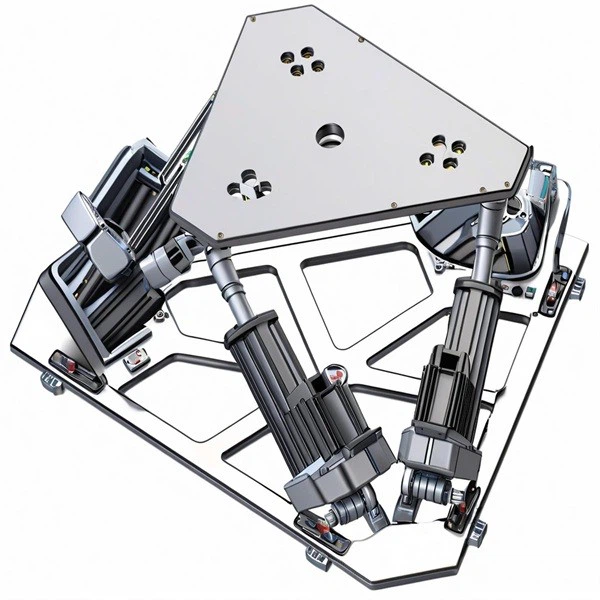

Performance
Too much vibration can affect the accuracy of the platform's movement. For example, in a robotic arm simulation on a motion platform, excessive vibration can cause the arm to move slightly off - target, leading to inaccurate results. This is a big deal in applications where precision is key, like in aerospace or surgical simulations.
User Comfort
If the motion platform is used for a virtual reality (VR) experience or a gaming setup, high vibration levels can be really uncomfortable for the user. No one wants to feel like they're on a bumpy ride when they're supposed to be immersed in a smooth virtual world. It can also cause fatigue and even nausea over time.
Durability
Vibration can cause wear and tear on the platform's components. Continued high - level vibration can loosen screws, damage bearings, and even crack the platform's frame. This means more maintenance and higher costs in the long run.
Controlling Vibration Levels
As a motion platform supplier, we take several steps to control vibration levels.
Motor Selection
Choosing the right motor is crucial. We look for motors with low vibration characteristics. Some advanced motors come with built - in vibration dampening features, like special insulation or counter - rotating components that help cancel out vibrations.
Load Balancing
We provide guidance on how to properly distribute the load on the platform. This might involve using load - balancing fixtures or adjusting the placement of the object on the platform. By ensuring an even load, we can significantly reduce vibration.
Structural Design
Our motion platforms are designed with strong, rigid structures. We use high - quality materials and precision - engineered components to minimize vibration. For example, we might use reinforced steel frames and high - grade bearings to ensure smooth and stable operation. Additionally, we incorporate vibration - absorbing materials, like rubber grommets or shock - absorbing pads, at key points in the platform's structure.
Comparing Vibration Levels in Different Types of Motion Platforms
Let's take a quick look at how vibration levels compare in different types of motion platforms.
3 Axis Motion Platform
The 3 Axis Motion Platform is designed to move in three axes: X, Y, and Z. Because it has multiple axes of movement, it can be more prone to vibration, especially if the control systems for each axis are not well - coordinated. However, with proper design and calibration, we can keep the vibration levels in check.
3 DOF Motion Platform
The 3 DOF Motion Platform has three degrees of freedom, which could include movements like pitch, roll, and yaw. These platforms are often used in military and aerospace simulations, where low vibration is essential for accurate training. Our engineers work hard to design these platforms with minimal vibration, using advanced control algorithms and high - performance motors.
Vibration Test Table
As the name suggests, the Vibration Test Table is used to test the effects of vibration on various products. Ironically, it needs to have a very precise and controlled vibration level. Our vibration test tables are calibrated to produce specific vibration frequencies and amplitudes, ensuring accurate testing results.
Why It Matters to You
If you're in the market for a motion platform, understanding the vibration level is essential. Whether you're using it for industrial testing, entertainment, or educational purposes, the vibration level can greatly affect its performance and your satisfaction.
A high - quality motion platform with low vibration levels will give you more accurate results, a more comfortable user experience, and longer - lasting durability. That's why we, as a motion platform supplier, are so committed to providing platforms with optimal vibration characteristics.
Let's Talk
If you're interested in learning more about our motion platforms and their vibration levels, or if you're looking to make a purchase, don't hesitate to reach out. We'd love to talk with you about your specific needs and how our platforms can meet them. Whether it's a 3 Axis Motion Platform, a 3 DOF Motion Platform, or a Vibration Test Table, we have the expertise to guide you through the selection process.
References
- Mechanical Vibration Analysis and Prediction, by J.C. Sinha
- Handbook of Noise and Vibration Control, by Malcolm J. Crocker