

What is the vibration level of a 3 DOF motion platform?
Jul 03, 2025
What is the vibration level of a 3 DOF motion platform?
As a supplier of 3 DOF motion platforms, I've encountered numerous inquiries about the vibration levels of these remarkable pieces of equipment. In this blog, I'll delve into the concept of vibration levels in 3 DOF motion platforms, exploring what they are, why they matter, and how they can impact various applications.
Understanding 3 DOF Motion Platforms
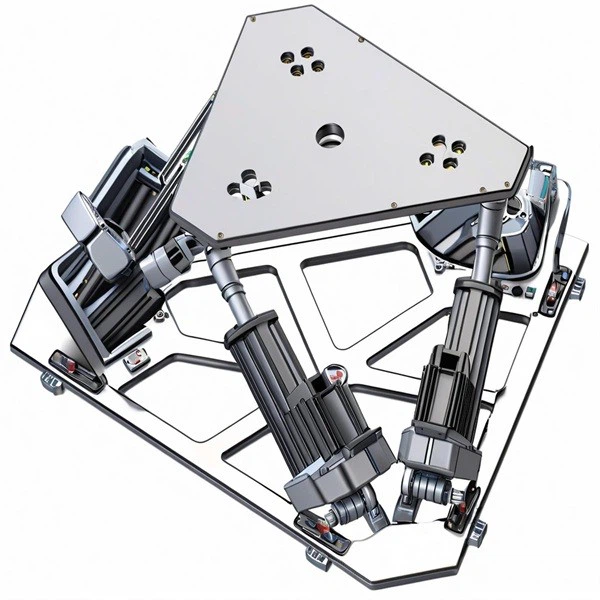
Before we dive into vibration levels, let's briefly understand what a 3 DOF (Degree of Freedom) motion platform is. A 3 DOF motion platform is a mechanical device that can move in three independent directions: pitch (rotation around the lateral axis), roll (rotation around the longitudinal axis), and heave (vertical linear motion). These platforms are widely used in various industries, including aerospace, automotive, entertainment, and simulation training. You can learn more about 3 DOF Motion Platform on our website.

What is Vibration Level?
Vibration level refers to the magnitude and characteristics of the vibrations produced by a 3 DOF motion platform during its operation. Vibrations are essentially mechanical oscillations that can occur due to various factors, such as the movement of the platform, the interaction between its components, and external forces.
The vibration level of a 3 DOF motion platform is typically measured in terms of acceleration, velocity, or displacement. Acceleration is the most commonly used parameter as it provides a direct measure of the force exerted by the vibrations. It is usually expressed in units of meters per second squared (m/s²) or gravitational acceleration (g), where 1 g is equal to 9.81 m/s².
Factors Affecting Vibration Levels
Several factors can influence the vibration levels of a 3 DOF motion platform. Understanding these factors is crucial for ensuring optimal performance and minimizing the negative effects of vibrations.
- Platform Design and Construction: The design and construction of the platform play a significant role in determining its vibration characteristics. A well-designed platform with high-quality components and proper structural support is less likely to generate excessive vibrations. For example, a platform with a rigid frame and precise motion control mechanisms will generally have lower vibration levels compared to a poorly designed one.
- Actuator Type and Performance: The type and performance of the actuators used in the platform also have a major impact on vibration levels. Actuators are responsible for generating the motion of the platform, and their characteristics, such as speed, force, and accuracy, can affect the smoothness of the motion and the resulting vibrations. Hydraulic actuators, for instance, are known for their high force capabilities but can also generate more vibrations compared to electric actuators.
- Load and Payload: The load and payload carried by the platform can influence its vibration levels. A heavier load or payload can increase the inertia of the platform, making it more difficult to control and potentially leading to higher vibrations. Additionally, an unevenly distributed load can cause imbalances in the platform's motion, resulting in increased vibrations.
- Operating Conditions: The operating conditions of the platform, such as the speed, frequency, and amplitude of the motion, can also affect vibration levels. Higher speeds and frequencies generally result in increased vibrations, as the platform has to move more rapidly and generate more force. Similarly, larger amplitudes of motion can also lead to higher vibrations.
Importance of Controlling Vibration Levels
Controlling the vibration levels of a 3 DOF motion platform is essential for several reasons.
- Safety: Excessive vibrations can pose a safety risk to operators and users of the platform. High levels of vibrations can cause discomfort, fatigue, and even injury, especially if the platform is used for extended periods of time. By controlling vibration levels, we can ensure the safety and well-being of those who interact with the platform.
- Performance and Accuracy: Vibrations can also affect the performance and accuracy of the platform. Excessive vibrations can cause errors in the motion control system, leading to inaccurate positioning and reduced precision. This can be particularly problematic in applications where high levels of accuracy are required, such as aerospace and automotive testing.
- Component Life and Reliability: High vibration levels can also have a negative impact on the life and reliability of the platform's components. Vibrations can cause wear and tear on the components, leading to premature failure and increased maintenance costs. By controlling vibration levels, we can extend the lifespan of the components and improve the overall reliability of the platform.
Measuring and Monitoring Vibration Levels
To ensure that the vibration levels of a 3 DOF motion platform are within acceptable limits, it is important to measure and monitor them regularly. There are several methods and tools available for measuring vibration levels, including accelerometers, vibration sensors, and data acquisition systems.
Accelerometers are the most commonly used devices for measuring vibration levels. They are small, lightweight sensors that can be attached to the platform to measure the acceleration of the vibrations. Vibration sensors, on the other hand, can measure other parameters such as velocity and displacement. Data acquisition systems are used to collect and analyze the data from the sensors, providing real-time information about the vibration levels of the platform.
By regularly measuring and monitoring vibration levels, we can detect any changes or abnormalities in the platform's performance and take appropriate action to address them. This can help prevent potential problems and ensure the continued safe and reliable operation of the platform.
Applications and Vibration Requirements
The vibration requirements of a 3 DOF motion platform can vary depending on its application. Different industries and applications have different tolerance levels for vibrations, and it is important to ensure that the platform meets these requirements.
- Aerospace and Aviation: In the aerospace and aviation industries, 3 DOF motion platforms are used for various purposes, such as flight simulation, aircraft testing, and astronaut training. These applications require high levels of accuracy and precision, and vibrations can have a significant impact on the performance and safety of the platform. As a result, the vibration levels in these applications are typically required to be very low, often in the range of a few millimeters per second squared (mm/s²) or less.
- Automotive Testing: In the automotive industry, 3 DOF motion platforms are used for vehicle testing, such as suspension testing, engine testing, and crash simulation. These applications also require high levels of accuracy and precision, and vibrations can affect the results of the tests. The vibration requirements in automotive testing can vary depending on the specific test being conducted, but they are generally in the range of a few centimeters per second squared (cm/s²).
- Entertainment and Gaming: In the entertainment and gaming industries, 3 DOF motion platforms are used to provide immersive experiences, such as virtual reality (VR) and motion simulation games. While the vibration requirements in these applications are not as strict as in aerospace and automotive testing, they still need to be controlled to ensure a comfortable and enjoyable experience for the users. The vibration levels in entertainment and gaming applications are typically in the range of a few decimeters per second squared (dm/s²).
Comparison with Other Motion Platforms
When considering the vibration levels of a 3 DOF motion platform, it is also important to compare them with other types of motion platforms, such as 6 DOF motion simulators and vibration test tables.
- 6 DOF Motion Simulators: A 6 DOF (Degree of Freedom) motion simulator is a more advanced type of motion platform that can move in six independent directions: pitch, roll, yaw (rotation around the vertical axis), heave, surge (longitudinal linear motion), and sway (lateral linear motion). While 6 DOF motion simulators offer greater flexibility and realism, they also tend to generate more vibrations compared to 3 DOF motion platforms. This is because they have more moving parts and a more complex motion control system. You can find more information about High End 6 Dof Motion Simulator on our website.
- Vibration Test Tables: Vibration test tables are specifically designed for testing the vibration resistance of products and components. They are capable of generating high levels of vibrations at different frequencies and amplitudes. In comparison, 3 DOF motion platforms are generally designed for motion simulation and training applications, and their vibration levels are typically lower. You can learn more about Vibration Test Table on our website.
Conclusion
In conclusion, the vibration level of a 3 DOF motion platform is an important parameter that can have a significant impact on its performance, safety, and reliability. By understanding the factors that affect vibration levels, measuring and monitoring them regularly, and ensuring that the platform meets the specific requirements of its application, we can ensure optimal performance and minimize the negative effects of vibrations.
If you are interested in learning more about our 3 DOF motion platforms or have any questions about vibration levels, please feel free to contact us. Our team of experts is always ready to assist you and provide you with the information you need. We look forward to the opportunity to discuss your specific needs and help you find the right solution for your application.
References
- Meirovitch, L. (2001). Fundamentals of Vibrations. McGraw-Hill.
- Inman, D. J. (2014). Engineering Vibration. Pearson.
- Rao, S. S. (2011). Mechanical Vibrations. Prentice Hall.