

How do you control a climbing wall robot?
Nov 17, 2025
As a supplier of Climbing Wall Robots, I've witnessed firsthand the incredible potential and challenges associated with these remarkable machines. In this blog, I'll delve into the intricacies of controlling a climbing wall robot, exploring the technologies, strategies, and considerations that go into making these robots perform efficiently and safely.

Understanding the Basics of Climbing Wall Robots
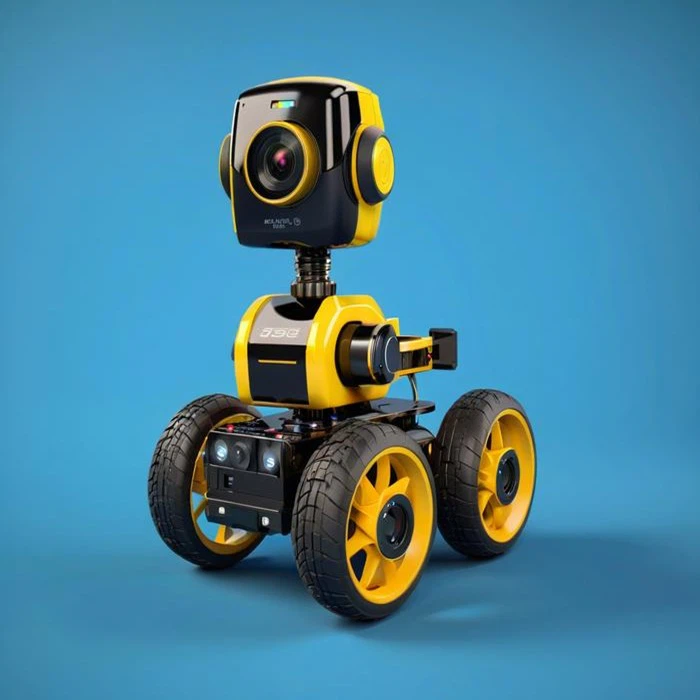
Before we dive into the control mechanisms, it's essential to understand what a climbing wall robot is and what it can do. A Climbing Wall Robot is a specialized robotic device designed to move vertically on various surfaces, such as walls, ceilings, and even irregular structures. These robots are equipped with advanced sensors, actuators, and control systems that allow them to navigate complex environments and perform a wide range of tasks.
Climbing wall robots have numerous applications across different industries. For example, in the construction industry, they can be used for inspection, maintenance, and painting of high-rise buildings. In the manufacturing sector, they can assist in the assembly and quality control of large structures. Additionally, in the field of search and rescue, these robots can access hard-to-reach areas to locate survivors during disasters.
Key Components for Control
To control a climbing wall robot effectively, several key components are required. These components work together to ensure the robot's stability, mobility, and functionality.
Sensors
Sensors play a crucial role in providing the robot with information about its environment. Some of the commonly used sensors in climbing wall robots include:
- Inertial Measurement Units (IMUs): These sensors measure the robot's acceleration, angular velocity, and orientation. By continuously monitoring these parameters, the robot can maintain its balance and stability while climbing.
- Distance Sensors: Ultrasonic or laser distance sensors are used to detect obstacles and measure the distance between the robot and the wall. This information helps the robot avoid collisions and adjust its path accordingly.
- Force Sensors: Force sensors are installed on the robot's feet or suction cups to measure the contact force with the wall. This allows the robot to ensure a secure grip and prevent slipping.
Actuators
Actuators are responsible for moving the robot's limbs or other moving parts. In climbing wall robots, the most common types of actuators are:
- Electric Motors: Electric motors are used to drive the robot's wheels, tracks, or legs. They provide precise control over the robot's movement and can be easily integrated with the control system.
- Pneumatic or Hydraulic Actuators: These actuators are used in some climbing wall robots to provide high force and quick response times. They are particularly useful for robots that need to perform heavy lifting or rapid movements.
Control System
The control system is the brain of the climbing wall robot. It processes the sensor data, makes decisions based on the robot's mission, and sends commands to the actuators. There are several types of control systems that can be used in climbing wall robots, including:
- PID Controllers: Proportional-Integral-Derivative (PID) controllers are widely used in robotics for their simplicity and effectiveness. They adjust the robot's control parameters based on the error between the desired and actual values.
- Fuzzy Logic Controllers: Fuzzy logic controllers are suitable for handling complex and uncertain situations. They use fuzzy rules to make decisions based on the sensor data, which can be more intuitive and flexible than traditional control methods.
- Neural Network Controllers: Neural network controllers are capable of learning from experience and adapting to changing environments. They can be trained to optimize the robot's performance based on a large amount of data.
Control Strategies
Once the key components are in place, the next step is to develop a control strategy for the climbing wall robot. The control strategy determines how the robot moves, interacts with the environment, and achieves its mission. Here are some common control strategies used in climbing wall robots:
Autonomous Control
Autonomous control allows the robot to operate independently without human intervention. In this mode, the robot uses its sensors to perceive the environment, plan its path, and execute the necessary actions. Autonomous control is particularly useful for tasks that require continuous monitoring or repetitive actions, such as inspection or cleaning.
To implement autonomous control, the robot needs to have a mapping and localization system. This system creates a map of the environment and determines the robot's position within the map. Based on this information, the robot can plan a collision-free path to its destination.
Teleoperated Control
Teleoperated control involves a human operator remotely controlling the robot. The operator uses a joystick, keyboard, or other input devices to send commands to the robot. Teleoperated control is useful for tasks that require human judgment or decision-making, such as performing delicate operations or handling unexpected situations.
In teleoperated control, the robot's sensors provide feedback to the operator, allowing them to monitor the robot's status and environment. The operator can then adjust the robot's movement and actions accordingly.
Hybrid Control
Hybrid control combines the advantages of autonomous and teleoperated control. In this mode, the robot can operate autonomously for most of the time, but the human operator can intervene when necessary. Hybrid control provides a balance between the efficiency of autonomous operation and the flexibility of human control.
Challenges and Solutions
Controlling a climbing wall robot is not without its challenges. Some of the common challenges include:
- Adhesion and Stability: Maintaining a secure grip on the wall while climbing is crucial for the robot's safety and performance. However, different surfaces have different adhesion properties, and the robot needs to be able to adapt to these variations.
- Obstacle Avoidance: The robot may encounter obstacles such as pipes, wires, or protrusions on the wall. It needs to be able to detect these obstacles in advance and plan a path around them.
- Power Management: Climbing wall robots typically have limited power sources, such as batteries. Efficient power management is essential to ensure the robot can complete its mission without running out of power.
To address these challenges, several solutions have been developed:
- Adaptive Adhesion Systems: Some climbing wall robots are equipped with adaptive adhesion systems that can adjust the adhesion force based on the surface properties. For example, suction cups can be used on smooth surfaces, while magnetic or electrostatic adhesion can be used on ferromagnetic or conductive surfaces.
- Advanced Obstacle Detection and Navigation Algorithms: By using advanced sensors and algorithms, the robot can detect obstacles more accurately and plan a more efficient path. For example, some robots use machine learning algorithms to recognize different types of obstacles and predict their behavior.
- Energy-Efficient Design and Power Management Strategies: Climbing wall robots can be designed to be more energy-efficient by using lightweight materials, optimizing the actuator design, and implementing power management strategies such as sleep modes and regenerative braking.
Applications and Related Products
Climbing wall robots have a wide range of applications, and our company offers several related products to meet different customer needs. In addition to the Climbing Wall Robot, we also have the Tank Rust Removal Robot and the Ship Hull Cleaning Robot.
The Tank Rust Removal Robot is specifically designed to remove rust and scale from the inner walls of tanks. It uses a combination of abrasive tools and high-pressure water jets to clean the surface effectively. The robot can operate autonomously or be teleoperated, depending on the requirements of the task.
The Ship Hull Cleaning Robot is used to clean the hulls of ships, removing barnacles, algae, and other marine growth. It is equipped with brushes, scrapers, and suction devices to ensure a thorough cleaning. The robot can move along the ship's hull using magnetic adhesion, providing a stable and efficient cleaning solution.
Conclusion
Controlling a climbing wall robot is a complex but rewarding task. By understanding the key components, control strategies, and challenges involved, we can develop effective solutions to ensure the robot's performance and safety. As a supplier of climbing wall robots, we are committed to providing high-quality products and innovative solutions to meet the diverse needs of our customers.
If you are interested in our climbing wall robots or have any questions about their control and operation, please feel free to contact us for a procurement discussion. We look forward to working with you to achieve your goals.
References
- Siciliano, B., & Khatib, O. (Eds.). (2016). Springer Handbook of Robotics. Springer.
- Craig, J. J. (2005). Introduction to Robotics: Mechanics and Control. Pearson Prentice Hall.
- Spong, M. W., Hutchinson, S., & Vidyasagar, M. (2006). Robot Modeling and Control. Wiley.