

Can a magnetic climbing robot be used for calibrating magnetic sensors?
Nov 14, 2025
Can a magnetic climbing robot be used for calibrating magnetic sensors? That's a question I've been getting a lot lately, and as a supplier of magnetic climbing robots, I'm excited to dive into this topic.
First off, let's talk a bit about what magnetic climbing robots are. These bad boys are like little superheroes on walls. They use magnetic forces to stick to ferromagnetic surfaces, which means they can climb up, down, and all around vertical and even inverted surfaces. We've got different types for various industrial applications. For instance, our Industrial Wall-Climbing Robot is designed for general industrial tasks on walls, like inspection and maintenance. Then there's the Ship Hull Cleaning Robot, which is specifically built to clean the hulls of ships. And if you need to do some high-altitude work, our High-Altitude Operation Robot is up for the challenge.
Now, onto the main question: can they be used for calibrating magnetic sensors? Well, to understand that, we need to know a bit about magnetic sensors. Magnetic sensors are used in a whole bunch of things, from smartphones to industrial equipment. They measure magnetic fields and can detect changes in them. Calibration is the process of making sure these sensors are accurate. If a magnetic sensor isn't calibrated correctly, it can give false readings, which can be a big problem, especially in safety-critical applications.
One of the key advantages of using a magnetic climbing robot for sensor calibration is its mobility. These robots can move around on ferromagnetic surfaces with ease. This means they can be programmed to move in specific patterns around a magnetic sensor. For example, they can move in a circular path at a set distance from the sensor. By doing this, they can create a known and controlled magnetic field around the sensor. This controlled field can then be used as a reference for calibration.
Let's say you've got a magnetic sensor installed on a large industrial tank. It's not easy to manually calibrate it because of the size and shape of the tank. But with our magnetic climbing robot, it can climb up the tank, position itself near the sensor, and start the calibration process. The robot can carry a magnetic source that emits a stable and known magnetic field. As it moves around the sensor, the sensor can measure the field, and the data can be compared to the known values. If there are any discrepancies, the sensor can be adjusted accordingly.
Another benefit is the repeatability. Our robots are programmed to follow precise paths and movements. This means that the calibration process can be repeated exactly the same way every time. In a manual calibration, there's always a chance of human error. Maybe the person doing the calibration doesn't hold the magnetic source at the right distance or angle every time. But with a robot, it's all about precision. It will follow the same path, at the same speed, and with the same magnetic field strength every single time.
However, there are also some challenges. One of the main challenges is the interference. The magnetic field of the robot itself can interfere with the sensor being calibrated. To overcome this, we've developed special shielding techniques. Our robots are designed with materials that can reduce the magnetic field leakage. This way, the only magnetic field the sensor is measuring is the one from the calibration source carried by the robot.
Also, the environment can play a role. If there are other magnetic sources nearby, like large electrical motors or other magnetic equipment, they can affect the calibration process. Before starting the calibration, we need to make sure the area is as free as possible from external magnetic interference. Our robots can be equipped with sensors to detect these external fields and adjust the calibration process accordingly.

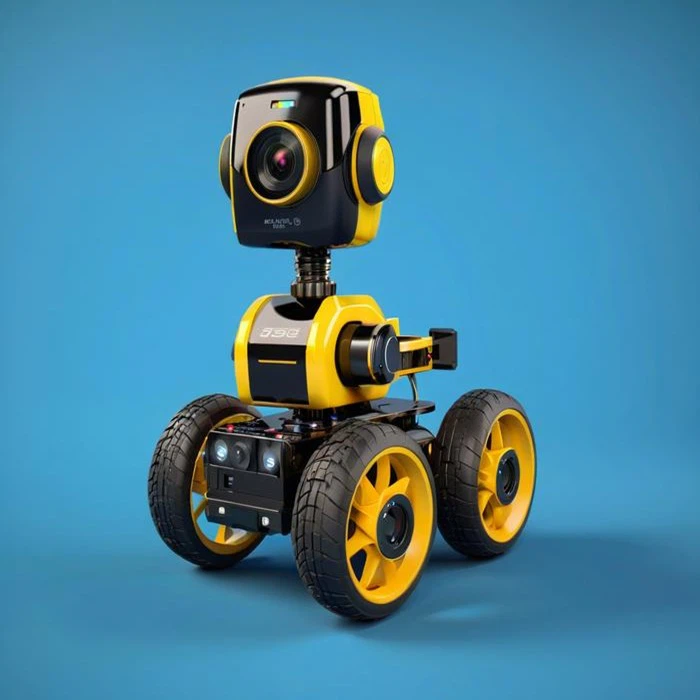
In terms of the technology behind it, our magnetic climbing robots use advanced control systems. These systems allow us to program the robot's movements precisely. We can set the speed, the path, and the position of the robot with high accuracy. The calibration source carried by the robot is also carefully designed. It can emit a stable magnetic field with a known strength and direction.
We've done some tests in our lab, and the results are promising. We've been able to calibrate magnetic sensors with a high degree of accuracy using our magnetic climbing robots. The robots were able to move around the sensors in a controlled manner, and the calibration data was consistent.
So, to sum it up, yes, a magnetic climbing robot can definitely be used for calibrating magnetic sensors. It offers mobility, repeatability, and the ability to work in difficult-to-reach places. Of course, there are challenges, but with our advanced technology and engineering, we're able to overcome them.
If you're in the market for a solution to calibrate your magnetic sensors or need a magnetic climbing robot for other industrial applications, we'd love to hear from you. Whether you're in the shipbuilding industry, the oil and gas sector, or any other industry that uses magnetic sensors, our robots can be a game-changer. Contact us to start a discussion about your specific needs and how our magnetic climbing robots can help you.
References
- "Magnetic Sensors: Principles and Applications" by Some Author
- "Industrial Robotics: Design and Applications" by Another Author